Leading Roofing Contractor New Orleans - FREE Roofing Estimate with No Hidden Charges - 24-Hour Roof Replacement Guarantee
Leading Roofing Contractor New Orleans - FREE Roofing Estimate with No Hidden Charges - 24-Hour Roof Replacement Guarantee

Leading Roofing Contractor New Orleans - FREE Roofing Estimate with No Hidden Charges - 24-Hour Roof Replacement Guarantee
Leading Roofing Contractor New Orleans - FREE Roofing Estimate with No Hidden Charges - 24-Hour Roof Replacement Guarantee


Talk to an Expert
504-370-8686
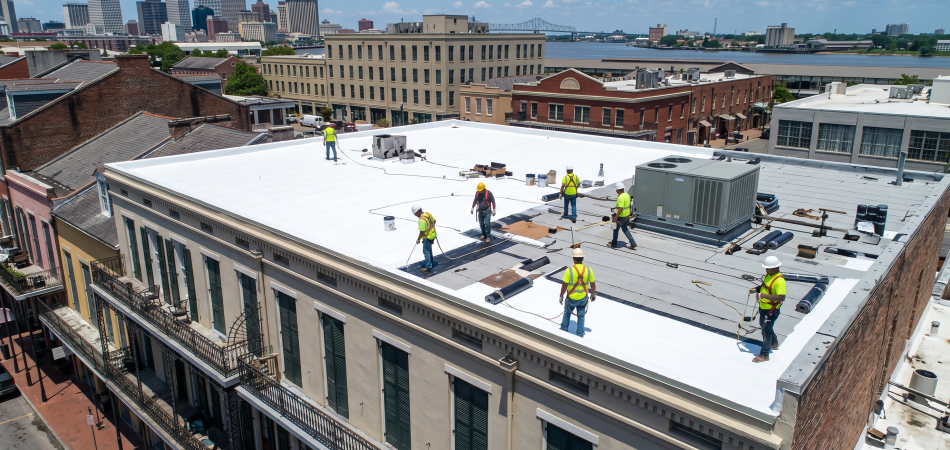
When a storm tears through the Gulf Coast, your commercial roof is the first line of defense between your business and thousands of dollars in damage. New Orleans doesn’t offer mild weather; it has intense heat, hurricane-force winds, and relentless rainfall that put commercial roofing systems under constant stress. Knowing how to recognize a roofing emergency and respond quickly can be the difference between a manageable repair and a full-scale disaster.
A commercial roofing emergency includes any sudden damage from storm impacts, leaks, or structural compromise that threatens your building’s interior, operations, or safety. Immediate signs include active water intrusion, visible membrane tears, sagging ceilings, and displaced rooftop equipment. Acting within hours, not days, is critical to minimizing damage.
Truth is, most commercial roofs aren’t built to fail; they fail because of what they’re up against. New Orleans sits in one of the most weather-stressed regions in the country. Hurricane season brings sustained winds that can exceed 100 mph. Summer brings brutal UV exposure that degrades roofing membranes over time. And when a tropical system stalls overhead, rainfall can overwhelm drainage systems within hours.
These compounding stressors mean your commercial roof can go from fine last week to actively leaking after a single storm event. Don’t let a minor issue turn into a major problem – the window between early damage and structural compromise can be surprisingly short.
Not every emergency announces itself with a collapsed ceiling. Many start small. Here’s what to watch for after any significant weather event:
Any one of these warrants an immediate call to a licensed commercial roofing contractor. Several of them appear together? That’s an emergency.
Speed matters. Here’s what your response should look like in the first 24 hours:
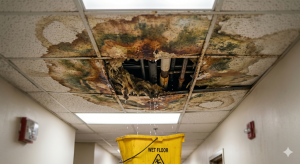 Document everything. Take photos and video of interior damage, ceiling conditions, and any visible exterior damage from safe vantage points. Your insurance claim depends on thorough documentation.
At Big Easy Roofer, our team is available 24/7 for emergency roofing situations across the Greater New Orleans area. We understand that business continuity is on the line, and we respond accordingly.
Many business owners don’t realize that how you handle the first 48 hours directly impacts your insurance outcome. Carriers want prompt notice, solid documentation, and evidence that you took reasonable steps to prevent additional damage. Temporary repairs you make yourself, like covering exposed areas, are typically covered and expected.
What they don’t want to see is weeks of delay, missing photos, or unpermitted permanent repairs made without an adjuster’s review. A licensed commercial roofing contractor who understands the claims process is genuinely one of your best assets here. We’ve helped countless commercial property owners across New Orleans, Slidell, Mandeville, and Hammond work through this process without the frustration.
The best emergency plan is the one that reduces your emergencies. Scheduling routine commercial roof inspections, especially before and after hurricane season, gives you a clear picture of where your system is vulnerable. Catching a failing seam or deteriorating flashing in April is far less expensive than discovering it during a Category 2 storm in August.
When you’re facing a commercial roofing emergency in New Orleans, every hour counts. Is your roof showing signs of storm damage or active leaking? Don’t wait. Our team at Big Easy Roofer provides commercial emergency roofing services across the Greater New Orleans metro area, backed by years of experience and a commitment to getting your building protected fast.
Call us today for a free roofing estimate with no hidden charges. We’re here around the clock, because your property’s protection can’t wait until morning.
Contact a licensed commercial roofing contractor within hours of discovering damage. Most insurance policies require prompt reporting, and delays in temporary mitigation can lead to denied claims for secondary damage like mold or structural deterioration.
It depends on the roofing system, but in most cases, especially after a storm, you should not. Wet membranes are slippery, and compromised sections may not support weight. Leave roof-level inspection to trained professionals.
Not necessarily. Many emergencies require targeted repairs rather than full replacement. A proper assessment determines the scope, which is why getting a licensed contractor on-site quickly matters before assuming the worst.
Yes. Our commercial emergency roofing services cover the Greater New Orleans metro area, including Mandeville, Madisonville, Slidell, and Hammond, Louisiana.


 Big Easy Roofer
  April 23rd 2026